SHRM CP Situational Questions Effective Strategies for 2026 Success
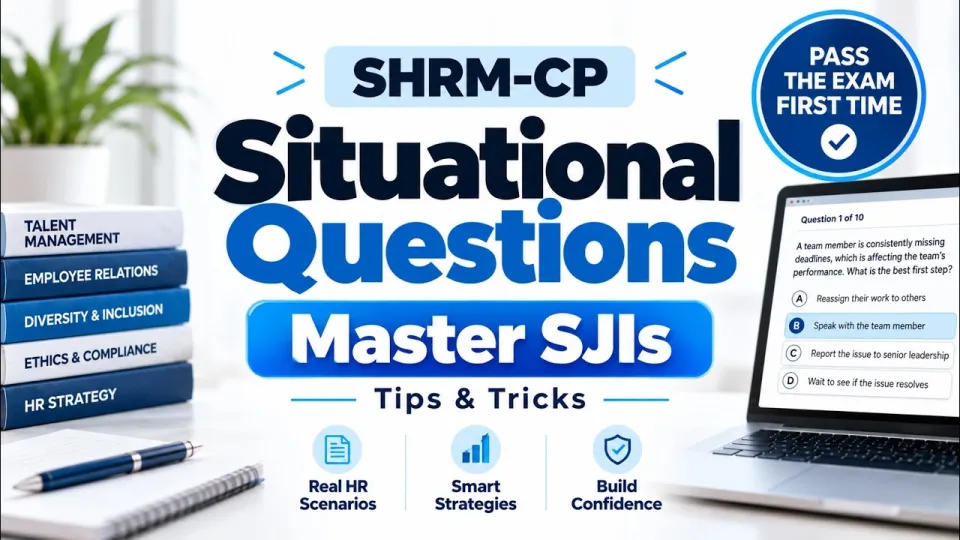
Video: SHRM CP Situational Questions (SJIs) | TIPS TO PICK THE RIGHT ANSWER
· based on the channel PrepSolution
SHRM CP Situational Questions require candidates to choose the best HR response from multiple plausible options. These Situational Judgment Items (SJIs) assess your ability to apply HR knowledge in realistic workplace scenarios, focusing on practical problem-solving rather than theoretical knowledge alone. To excel, you need clear strategies for analyzing questions and distinguishing the best answer from several reasonable choices.
Understanding the Nature of SHRM CP Situational Questions
SHRM CP situational questions simulate real HR dilemmas where multiple responses may seem appropriate. The key challenge is identifying whether the question asks for the immediate next step or the most effective long-term solution. This distinction influences whether you select the "first" action or the "best" action that comprehensively addresses the issue.
Situational questions often involve interpreting facts, applying HR policies and legal considerations, determining appropriate escalation levels, clarifying HR's role versus management responsibilities, and identifying all stakeholders involved. Mastery of these elements helps narrow down choices.
Five Decision Checks to Guide Your Answer Selection
When evaluating situational questions, apply these five decision checks:
- Facts: Analyze all scenario details carefully. Avoid assumptions beyond the provided information.
- Policy and Law: Ensure your chosen action complies with company policies and legal standards.
- Appropriate Escalation: Decide if the situation requires escalating to a higher authority or if it can be resolved at your level.
- HR’s Role: Recognize when HR should intervene versus when managers or others should handle the issue.
- People Involved: Identify all relevant parties (employee, manager, HR, others) and consider their roles in the resolution.
Using these checks systematically helps eliminate answers that violate policies, escalate unnecessarily, or overstep HR’s responsibilities.
Common Answer Traps to Watch For
The SHRM CP exam features several answer traps designed to challenge candidates:
- Premature Action: Choosing a response that acts too quickly without gathering sufficient information.
- Passive Responses: Selecting options that fail to address the problem effectively, often ignoring escalation or policy needs.
- Taking Over Manager’s Responsibilities: HR should support but not replace managerial duties; answers that do too much for the manager are usually incorrect.
- Unnecessary Escalation: Escalating a problem that can be resolved without higher-level involvement wastes resources and undermines proper channels.
- Legally Defective Options: Answers that risk legal non-compliance, such as ignoring discrimination laws or due process, must be avoided.
Recognizing these traps improves your ability to discriminate the best answer among realistic but flawed choices.
Practical Tips for Eliminating Wrong Answers
Rather than relying solely on your workplace experience, test each answer against the exact facts and wording of the question. Follow these steps:
- Match each option against all known facts; discard those inconsistent with scenario details.
- Confirm alignment with HR policies and relevant employment laws.
- Evaluate whether the timing of the action fits the question’s focus (immediate next step vs. best overall resolution).
- Check if the action respects HR’s role without overstepping or avoiding responsibility.
- Consider the impact on all people involved and whether the response engages the correct parties.
This methodical approach reduces errors caused by personal bias or assumptions about how your current workplace operates.
Example Scenario Walkthrough
Consider a scenario where a supervisor requests employee discipline following a shouting match. The situational question asks for the best HR response. Four options might range from immediate disciplinary action, mediation facilitation, gathering more information, or referring the issue to upper management.
Applying the five decision checks:
- Facts: Was the shouting isolated or part of a pattern?
- Policy/Law: What does company policy say about conflict resolution?
- Escalation: Is this issue manageable at HR or needs higher authority?
- HR Role: Should HR mediate or just advise the supervisor?
- People: Who should be involved to resolve this fairly?
By testing each answer against these criteria, the best choice often involves gathering facts and facilitating conflict resolution rather than rushing to discipline or escalating unnecessarily.
How to Prepare for SHRM CP Situational Judgment Questions
Practicing with real or simulated SHRM CP situational questions improves your ability to recognize traps and apply decision checks. Resources like PrepSolution’s free SHRM-CP practice questions offer valuable exercises.
Additionally, understanding the difference between "first" and "best" responses and knowing when to escalate or defer responsibility are critical skills. Regular review of HR policies, laws, and HR's role in conflict resolution enhances your judgment.
Useful Links
Conclusion
Mastering SHRM CP situational questions requires a clear strategy to distinguish the correct answer from several plausible options. By focusing on the five decision checks, recognizing common answer traps, and using practical elimination techniques, candidates can improve accuracy and confidence. Resources like PrepSolution provide excellent practice and detailed explanations to support exam readiness. Utilize the free practice questions linked above to sharpen your skills and approach situational judgment questions with a systematic, informed mindset.
Key takeaways
- Situational Judgment Items (SJIs) test HR decision-making skills on the SHRM CP exam.
- Key strategy: distinguish between first action and most effective solution in scenarios.
- Five decision checks guide answer selection: facts, policy/law, escalation, HR role, involved people.
- Common traps include premature action, passive responses, unnecessary escalation, and legal errors.
- Use scenario facts and question wording to eliminate incorrect answers, not just workplace habits.
Source: SHRM CP Situational Questions (SJIs) | TIPS TO PICK THE RIGHT ANSWER · Markdown version
Questions & answers
What are SHRM CP situational questions testing?
They assess your ability to apply HR knowledge in real workplace scenarios, focusing on decision-making, policy compliance, and appropriate escalation.
How do I know if a situational question wants the first or best action?
Carefully read the question wording to determine if it asks for the immediate next step (first action) or the most effective solution overall (best action).
What are common traps to avoid in SHRM CP situational questions?
Avoid premature actions, passive responses, taking over managerial duties, unnecessary escalation, and legally non-compliant answers.
Where can I practice SHRM CP situational judgment questions?
PrepSolution offers free practice questions and paid exam prep systems at https://prepsolution.com/free-practice/shrm-cp?utm_source=youtube&utm_medium=video&utm_campaign=shrmcp_longform&utm_content=cp_long_v09.